

At the start of your capital expenditure project, you need to decide whether you will purchase the capital asset with debt or set aside existing funds for the purchase. Saving money for the purchase usually implies that you will have to wait for a while before getting the asset you need. The accounting process of identifying, measuring, and estimating the costs relating to capital expenditures may be quite cost of debt formula complicated. Capital expenditures are often difficult to reverse without the company incurring losses. Most forms of capital equipment are customized to meet specific company requirements and needs. Over the life of an asset, total depreciation will be equal to the net capital expenditure.
COLLECT PAYMENTS
If you borrow part of your money at one interest rate and raise the rest from shareholders who expect a higher return, your true https://www.bookstime.com/ funding cost is neither one nor the other. Country risk, tax rules, and currency conditions can differ materially. At least quarterly, and sooner after major rate moves, refinancing, acquisitions, or buybacks. Only as a temporary proxy when market values are unavailable, and I flag the limitation. A lower WACC raises valuation mechanically, but it can hide risk if assumptions are unrealistic.
Cost of Capital
That price is referred to as the Present Value of Future Cash Flows. The process of discounting future cash flows is a focal theme/concept within Finance. If you’re after specific aspects of the cost of debt, feel free to explore individual sections. Where sections depend on one another, you’ll be pointed to the appropriate section when it’s relevant. To get our total interest, we’ll multiply each loan by its annual interest rate, then add up the results.
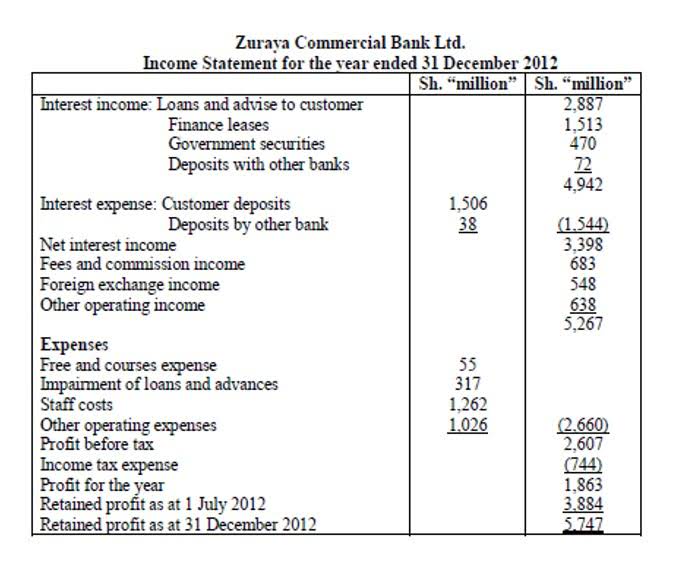
- For example, if a company has $50,000 in interest expenses and $1,000,000 in total debt, the pre-tax cost of debt would be 5%.
- The expenditures are capitalized (i.e., not expensed directly on a company’s income statement) on the balance sheet and are considered an investment by a company in expanding its business.
- Improving personal credit by paying bills on time and reducing credit utilization can lower your business’s cost of debt by 2-5 percentage points, potentially saving thousands of dollars.
- The market value of debt is $122.4 billion and the market value of equity is $2,500 billion.
- The cost of debt is an important factor in risk management as well.
- This lower rate reflects the financial advantage of using debt over equity in some cases, especially when interest expenses are tax-deductible.
- With that said, the cost of debt must reflect the “current” cost of borrowing, which is a function of the company’s credit profile right now (e.g. credit ratios, scores from credit agencies).
After-Tax Cost of Debt Calculation Analysis
- Businesses must strike the right balance between debt and equity to maintain financial stability.
- Credit ratings from agencies assess your ability to repay obligations.
- Capital investment decisions are a driver of the direction of the organization.
- The cost of debt is the effective interest rate that a company pays on its debt obligations, which can include bonds, loans, leases, and other forms of debt.
- There are many benefits to using the return on investment ratio that every analyst should be aware of.
- Instead, repayment is generated through returns on shares, like dividends and valuations.
It is a critical measure in financial analysis for valuing a company’s entire operations. A common challenge is addressing how to calculate levered beta for a private company that lacks readily available market data. For example, if a company has a pre-tax cost of debt of 10.0% and a corporate tax rate of 30%, the after-tax cost is calculated as 10.0% multiplied by (1 minus 0.30).


This WACC functions as the Discount Rate applied across the entire projection period within a DCF Model. We will demonstrate the application of the levered beta formula using the following inputs to incorporate financial risk specific to a hypothetical company’s capital structure. I treat WACC as a company’s financial hurdle rate, built from the actual mix of equity, debt, and sometimes preferred stock.

Shepherd Outsourcing provides expert insights and tools to help businesses calculate and manage the cost of debt effectively. For companies operating internationally, currency risks can also play a role. A business borrowing in foreign currencies may face unpredictable changes in debt costs if exchange rates fluctuate significantly. Some industries tend to achieve higher ROEs than others, and therefore, ROE is most useful when comparing companies within the same industry.
As a result of this, it also represents the return a debt investor requires in order to invest. Thus, in the simplest sense, the Cost of Debt is nothing but the interest rate on a loan. Reflects the annual borrowing cost, including interest and fees like loan origination or service charges. It includes built-in models for annualized returns, capital gains, and more.
- It’s calculated using the Capital Asset Pricing Model (CAPM), which combines the risk-free rate, the stock’s beta, and the equity risk premium (ERP).
- By comparing both, companies and individuals can better understand the total cost of borrowing and its financial implications.
- EnKash is India’s leading spend management platform, simplifying payments, expenses, cards, and rewards for businesses.
- In this section, we will explain what the cost of debt is, how it is calculated, and why it is important for financial analysis.
- This deductibility creates an “interest tax shield,” which substantially reduces the true economic cost of borrowing.
CapEx in Valuation
The choice of the corporate tax rate (T) inversely impacts the resulting levered beta ($\beta_L$). The tax rate is integral because it determines the magnitude of https://kalyamcity.com/guide-to-business-expense-resources-internal/ the interest tax shield. As T increases, the economic benefit of the tax shield increases, effectively lowering the net cost of debt financing. Mathematically, in the Hamada formula, a higher T reduces the magnitude of the debt multiplier $1 + (1 – T)(D/E)$.
